Light Sculptures: The Art of Steel and Light
At Sype Design, light is more than illumination. It is a sculptural material, shaping space, revealing textures and creating emotion.
Drawing on a background in advertising photography, my approach to light sculptures explores the relationship between raw steel, geometric forms and indirect lighting.
Each handcrafted steel sculpture reflects an ongoing dialogue between metal craftsmanship, artistic intuition and contemporary design.
From the subtle reflections of oxidized steel to the balance of geometric structures, my work explores how sculptural lighting can transform both modern and classical interiors.
Discover the inspirations behind Sype Design: an artistic journey where steel, shadow and light become a language of their own.
Explore the stories below to discover how steel craftsmanship, artistic expression, light and time shape the world of sculptural lighting.
The Creative Vision Behind Sype Design
Light as a Living Material
Article#1
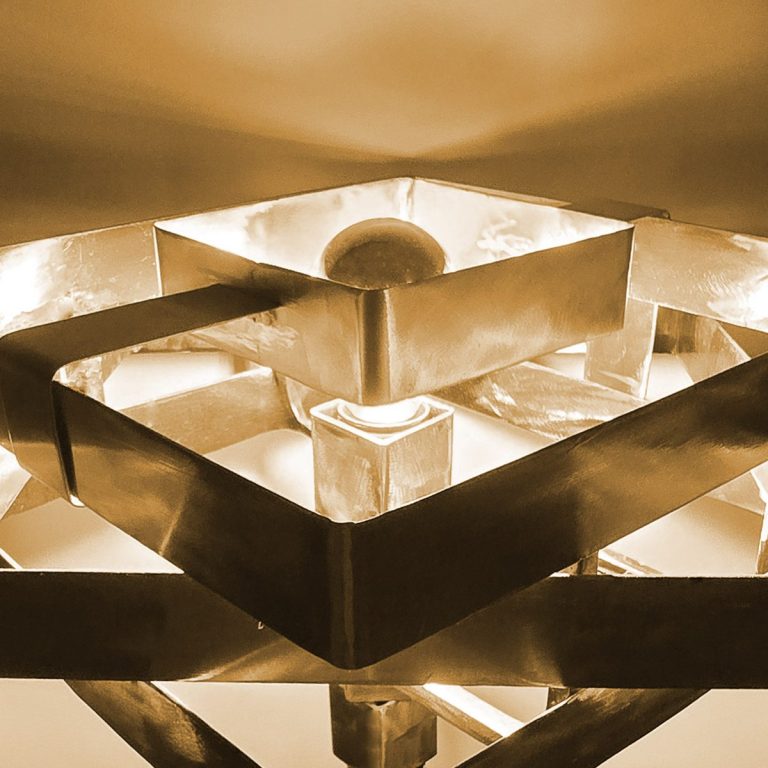
For me, light is more than illumination. It has texture, warmth and emotion.
Across raw and polished steel, it flows, reflects and softens. Through indirect lighting, each handcrafted steel light sculpture creates its own atmosphere, transforming metal into a living material.
Oxidized Steel & Light: the Beauty of reflection
Article#2
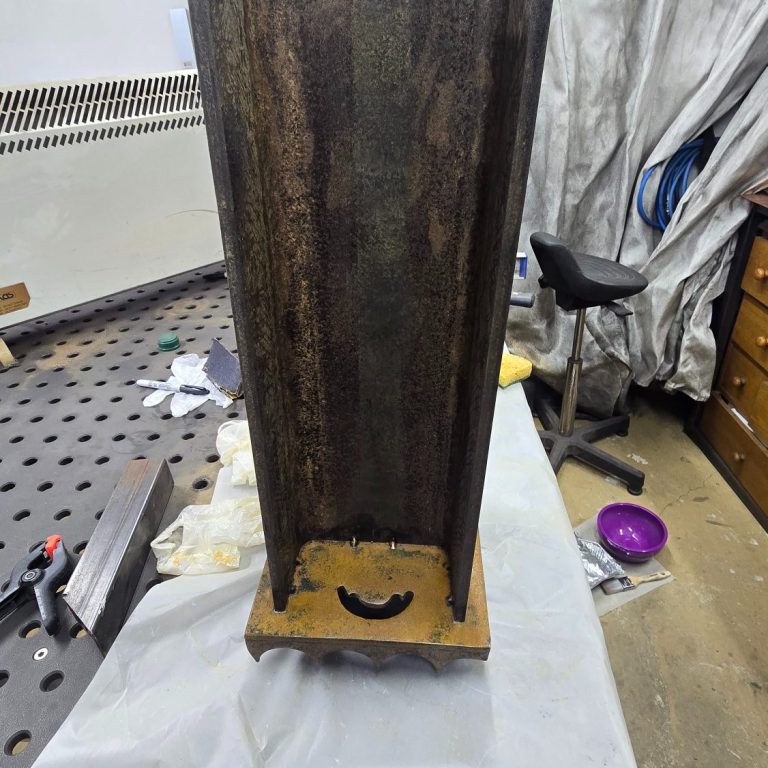
Oxidation transforms raw steel into a richly textured surface that captures and diffuses indirect light.
Through carefully controlled patinas, metal becomes a natural reflector, bringing warmth, depth and character to contemporary sculptural lighting.
Welding as an Art Form: Shaping Steel & Light
Article#3
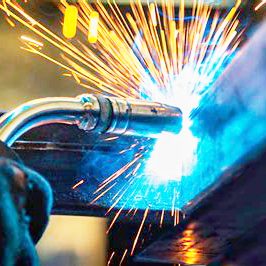
Welding is more than a technical process. It is a precise, deliberate gesture that gives structure and balance to each sculpture.
In my handcrafted steel light sculptures, every joint serves the form, allowing geometry, metal craftsmanship and light to exist in harmony.
Sculptural Lighting in Classic Interiors
Article#4
When raw steel meets wood, architectural details and traditional interiors, light creates a dialogue between past and present.
Discover how a handcrafted steel light sculpture can bring warmth, contrast and contemporary elegance to a classic interior.
The Value of Art: Time , Craftsmanship & Emotion
Article#5
The value of a handcrafted light sculpture goes far beyond the hours spent creating it.
It reflects artistic research, experimentation, metal craftsmanship and the patience required to transform raw steel into sculptural lighting. Each creation carries the story of its making.
Handcrafted vs Industrial Lighting: The Beauty of Imperfection
Article#6
Industrial lighting is designed for consistency and mass production. Handcrafted steel light sculptures follow a different philosophy.
Every curve, weld and surface reflects artistic decisions and human craftsmanship. Between technical precision and creative freedom, subtle imperfections become part of the sculpture's character.
Light as a Living Material
Working with light is like composing a photograph without a camera.
Intensity becomes a brush, reflection becomes ink.
I search for the perfect nuance, the one that reveals the structure without betraying it.
My handcrafted steel light sculptures are conceived as sensitive materials.
They transform a space without overwhelming it, inviting a sense of calm.
Within an interior, living light enters into dialogue with darkness, with time and with the memory of metal.
Light possesses an almost spiritual dimension.
It connects people to their surroundings, revealing what was once invisible.
Working with light also means working with silence: controlling intensity, guiding reflections and creating a visual rhythm.
Through carefully balanced indirect lighting, each steel light sculpture becomes an inner landscape, a place for contemplation where metal is no longer perceived as cold, but as something alive.
It is within this delicate alchemy that poetry meets craftsmanship and technical precision.
Oxidized Steel & Light: When Metal Becomes a Reflective Surface
LSteel is not a static material.
As it oxidizes, it reacts, transforms and gains visual depth. It becomes a living surface, capable of interacting with light and space.
In my recent oxidized steel light sculptures, rust is neither an accident nor a decorative effect. It is treated as a material in its own right, carefully developed to capture, diffuse and warm indirect lighting. A controlled transformation that changes how we perceive metal.
A Living Surface, Never Uniform
Oxidation creates a complex skin.
Matte areas meet denser textures, sometimes almost satin-like. Deep shades emerge, ranging from dark brown to mineral tones, never entirely fixed or reproducible.
Unlike a smooth or painted surface, oxidized steel does not simply reflect light directly.
It diffuses and fragments it, allowing light to travel across the sculptural forms. Indirect lighting settles into the texture, creating soft halos and a visual depth that would be difficult to achieve otherwise.
The Risk of Excess
When oxidation is pushed too far, the balance changes.
The colour becomes too bright, too orange, too dominant. The material begins to overpower the form, flattening its volumes and disturbing its relationship with light.
My approach is to stop the oxidation just before this turning point, capturing the moment when steel reveals its full richness without becoming visually overwhelming.
This balance is delicate, and it is precisely what gives each creation its character.
Preserving the Surface, Preserving the Light
Once the desired palette has been achieved, the surface is stabilized.
Not to freeze the material, but to preserve its ability to diffuse and reflect light over time.
The rust is no longer left to evolve uncontrollably, yet it retains its depth, subtle variations and ability to interact with illumination.
Oxidized steel becomes a natural reflector: imperfect, organic and far removed from standardized industrial finishes.
When Light Becomes Atmosphere
In these sculptures, light never seeks to dominate.
It moves, reflects and sometimes disappears before emerging again. It reveals the irregularities of the metal, emphasizes its relief and brings the surface to life without overwhelming it.
Oxidized steel acts almost like a luminous memory. It retains the visual trace of light passing across its surface, making it warmer and more intimate.
Every viewing angle and every variation in light intensity changes the perception of the sculpture.
A New Palette for Contemporary Steel Sculpture
Through this exploration of oxidation, steel moves beyond its traditionally cold and austere appearance.
It becomes a sensitive material, almost tactile to the eye, capable of transforming light into atmosphere.
Each handcrafted steel light sculpture emerges from a precise balance between natural transformation and artistic intention.
The result is sculptural lighting designed not only to illuminate a space, but to inhabit it quietly.
Welding as an Art Form : Shaping Steel & Light
Welding is often perceived as a brutal, utilitarian gesture, a purely functional process.
In the collective imagination, it evokes sparks, noise, flying metal and the marks left behind. Yet in my artistic practice, welding represents something entirely different.
It is an invisible form of writing.
A silent gesture that connects, stretches and balances.
A precise moment when separate pieces of steel cease to be fragments and become a sculptural form.
From Rough Welding to Deliberate Craftsmanship
There is a rough, almost violent kind of welding.
The welding of industrial workshops: powerful, forceful, projecting sparks and leaving visible marks. It joins materials together, but its presence dominates.
Then comes a more controlled, precise approach.
A way of welding that has taught me to appreciate steel. Less visually aggressive, it allows me to consider each joint as a line rather than a constraint. The material begins to enter into dialogue with the gesture.
And finally, there is fine welding.
Discreet. Almost intimate.
Comparable to delicate stitching or carefully composed handwriting. A weld that does not seek attention, but instead disappears into the sculptural form.
The Joint as a Defining Moment
In a steel light sculpture, everything often depends on the point where two elements meet.
Welding is not a minor detail. It is the turning point between a drawing and a physical object.
Poorly positioned, it interrupts the visual flow.
Too prominent, it distracts the eye.
When mastered, it becomes almost invisible.
It is through this restraint that balance emerges: continuity of lines, carefully controlled tension and the hidden stability that allows light to circulate freely.
Metal Craftsmanship in the Service of Light
Welding should never compete with light.
It should serve it.
In my handcrafted steel light sculptures, welding follows the volumes, accompanies the curves and respects the interruptions in form.
It gives steel the structural strength it needs, allowing light to flow, reflect and diffuse without visual obstruction.
This is what enables sculptural lighting to exist without imposing itself.
Between Strength and Finesse
Working with steel means accepting its strength.
But sculpting it through welding means introducing finesse.
Every assembly is conceived as a balance between tension and softness, solidity and visual lightness.
Nothing is left to chance, yet nothing is intended to appear demonstrative.
Welding becomes an exercise in restraint, almost an inner discipline.
Invisibility as a Signature
In a world saturated with visual effects and demonstrations of technical skill, I have chosen the opposite approach.
Where the weld disappears, the form emerges.
Where the assembly becomes almost invisible, light takes its place.
It is within this deliberate discretion that my artistic signature can be found.
A form of writing in steel, visible only to those who take the time to look.
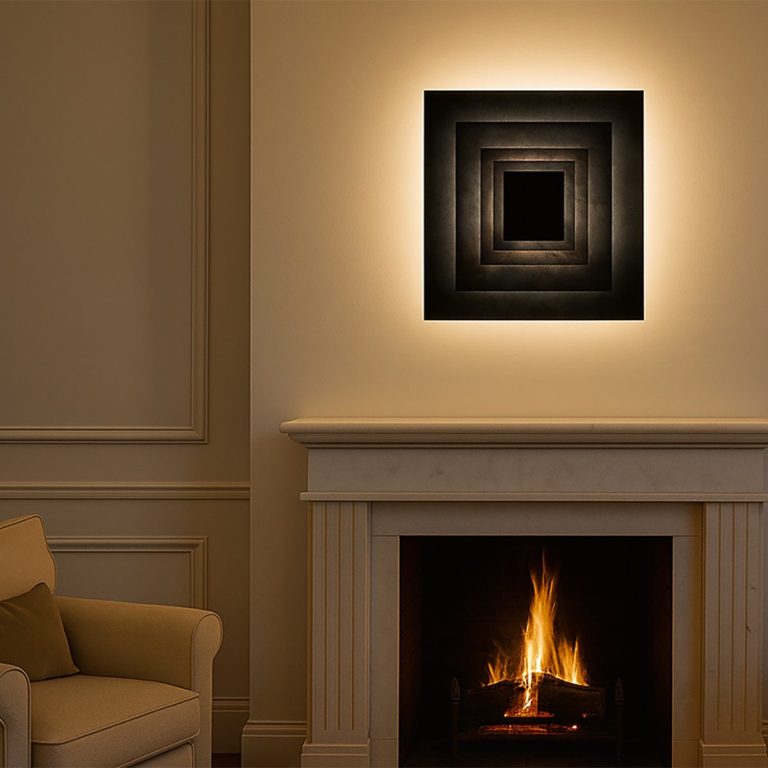
Sculptural Lighting in Classic Interiors
Introducing industrial lighting into a classic interior is not an act of provocation. It is a search for balance.
With its density, texture and reflections, raw steel creates a striking visual contrast against the softness of traditional woodwork and textiles. A contemporary presence within a setting shaped by history.
In a Parisian Haussmann apartment or an elegant family home, a Sype Design steel light sculpture does not seek to dominate the room. It becomes part of its architecture.
Its steel base echoes the building's structure, its warm indirect lighting reveals decorative mouldings, and its geometric forms introduce a subtle poetic tension.
The key lies in the art of contrast.
Like a piece of jewellery in a carefully chosen setting, a refined sculptural lamp enhances its surroundings without overpowering them.
Choosing a Sype Design creation means moving beyond conventional decoration to establish a dialogue between past and present, craftsmanship and contemporary design, emotion and material.
Each handcrafted steel light sculpture retains the traces of the maker's gestures and the transformative power of fire.
These carefully controlled imperfections give the light its authenticity, creating a living presence far removed from standardized industrial production.
Beyond aesthetics, this meeting of styles expresses a deeper intention: reconciling traditional craftsmanship with modern design.
The raw steel of a Sype Design sculpture is not a static material. It evolves, develops a patina and carries the memory of time.
Within a refined interior, this honest material becomes a reminder of what truly matters: the beauty of an object thoughtfully conceived, carefully crafted and personally signed.
It is precisely this contrast, between the refinement of artistic craftsmanship and the simplicity of steel, that creates an authentic, lasting and timeless emotion.
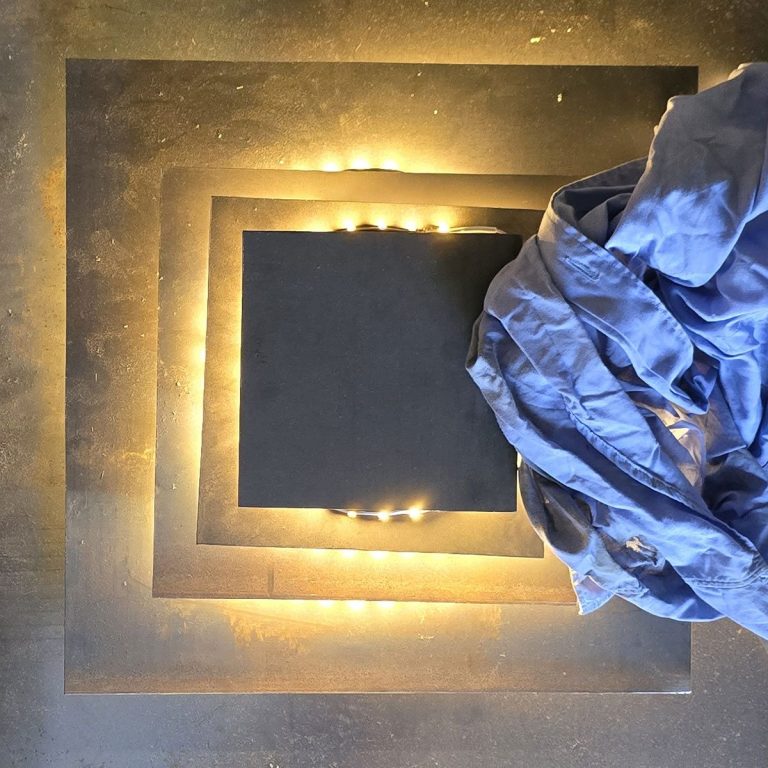
The Value of Art : Time, Craftsmanship & Emotion
In my workshop, every steel light sculpture begins with a combination of intuition and precision.
Some creations take shape in just a few days, while others require months of exploration, experimentation and refinement.
Their price reflects this delicate balance between the time invested in craftsmanship and the emotion a work of art can inspire.
Like any work of contemporary art, its perceived value may evolve over time, shaped by the artist's journey, the recognition of their work and the eyes of those who discover it.
Acquiring a Sype Design sculpture today means discovering an emerging artistic signature and becoming part of a creative journey that continues to unfold.
Each numbered creation carries its own story, a fragment of light and craftsmanship that may one day find its place within a personal art collection.
The value of an artwork cannot be reduced to a simple calculation. It emerges from the encounter between an artistic vision and the person who connects with it.
It reflects the human experience, technical knowledge, creative freedom and willingness to take risks that shape every creation.
In a world where everything moves increasingly fast, owning a handcrafted steel sculpture is also a way of embracing a different relationship with time.
The time spent searching for the right form.
The heat of the flame.
The precision of a gesture.
The patience required to transform raw steel into sculptural lighting.
Collecting art is ultimately a personal choice: selecting a work for its visual strength, its story, its emotional resonance and the artistic vision behind it.
A Sype Design creation is more than a source of light. It is an expression of contemporary craftsmanship, material exploration and artistic identity, designed to live within a space and accompany it over time.
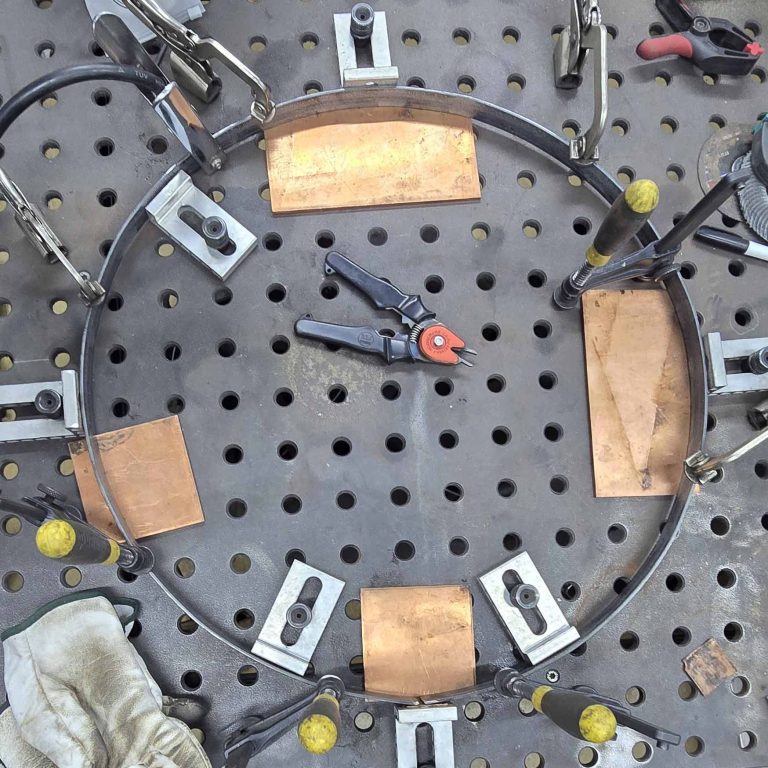
Handcrafted vs Industrial Lighting : The Beauty of Imperfection
We live in a world where almost everything can be perfectly adjusted.
Machines cut metal with millimetre precision. Components are reproduced identically. Finishes can be flawless.
And yet, something is often missing.
As a perfectionist craftsman, I immediately notice the technical imperfections of an object.
But from an artistic perspective, imperfection is often what gives an object its character.
It introduces a human dimension.
A handcrafted steel lamp does not need to be perfectly uniform.
It needs to feel alive.
The Human Touch Behind Handcrafted Lighting
In industrial production, a lamp can be manufactured thousands of times, with each example matching the previous one.
In an artisan's workshop, the process is different.
A handmade steel lamp carries traces of its construction and of the decisions made by its creator.
It reflects a particular moment, a level of craftsmanship, the tools available and an artistic intuition.
It carries the signature of the person who made it, at that particular stage of their creative journey.
Even when I revisit an existing design, the result will never be exactly the same.
The work evolves.
Because repeating a form without exploring it further holds little artistic interest for me.
How Long Does It Take to Create a Handmade Lamp?
It is easy to imagine that a lamp can be made in just a few hours.
In reality, one of my handcrafted steel light sculptures can require between 5 and 20 working days, sometimes longer.
Not simply to manufacture it.
But to understand it.
The creative process involves:
Taking components apart
Cutting and reshaping steel
Adding new elements
Adjusting proportions
Starting again
Testing different solutions
Observing the result
Sometimes an idea appears in just five minutes.
While handling pieces of raw steel, an unexpected shape emerges.
And suddenly, I think:
"That's beautiful."
Then I begin exploring how to transform that form into a light sculpture.
And that is when the real work begins.
The Invisible Work Behind Artisan Lighting
Creating a high-quality handmade lamp in France involves much more than shaping and welding metal.
There are also essential practical considerations:
Maintenance
Disassembly and accessibility
Electrical safety
Compliance with applicable standards
Durability
Surface finishes
Material sourcing
Testing
Technical adjustments
Corrections and improvements
Behind the artistic expression lies a simple responsibility:
Good craftsmanship must also mean safe craftsmanship.
Technical precision and electrical safety are integral parts of my approach to sculptural lighting.
Why Does Handcrafted Lighting Cost More Than Industrial Lighting?
A handcrafted lamp made in France will often cost more than a mass-produced industrial product.
Not necessarily because it is luxurious.
But because its creation takes time.
Its value reflects:
Hours of manual work
Experiments
Mistakes
Adjustments
Research and reflection
Experience
And above all, something less tangible:
The freedom to begin again.
Each experiment can lead to a new direction.
Each technical difficulty can inspire an unexpected artistic solution.
This freedom is an essential part of my creative process.
The Temptation of Perfect Machines
Modern technologies offer extraordinary precision.
A laser cutting machine can reproduce identical steel components quickly and efficiently.
But for an independent artist, the question is not purely technical.
Such equipment also represents:
A significant financial investment
Space within the workshop
Technical constraints
A different approach to production
And it raises a more personal question:
If creation becomes entirely dependent on machines, what happens to the human gesture?
An artistic idea does not always begin with a clear plan.
Sometimes it emerges from a mistake.
An unexpected movement.
A piece of steel bent too far.
A cut made too short.
An experiment that was never part of the original design.
And occasionally, the unexpected result is exactly what the sculpture needed.
Imperfection as an Artistic Signature
Industrial lighting often seeks consistency and repeatability.
Handcrafted lighting can embrace subtle variations.
A weld may reveal the movement of the hand.
A geometric form may carry a slight asymmetry.
An alignment may evolve during the creative process.
These details do not replace technical quality or precision.
They reveal the human presence behind the object.
They tell a story.
They reveal a gesture.
They reflect a creative journey.
Imperfection is not necessarily a weakness.
Sometimes, it becomes a signature.
Handcrafted and Industrial Lighting Follow Different Philosophies
Comparing a handmade lamp with an industrial product is not simply a question of quality or price.
They respond to different intentions.
Industrial lighting is generally designed for efficient, consistent reproduction.
Artisan lighting places greater emphasis on the relationship between the maker, the material and the finished object.
In my workshop, every contemporary steel light sculpture carries traces of its fabrication, my choices and my artistic sensitivity.
Even when I return to a familiar design, manual craftsmanship introduces new nuances.
There is no single absolute reference.
What ultimately matters is whether the finished creation has visual strength, balance and emotional presence.
Individual Expression Over Uniformity
Today, technology makes it possible to produce objects that are almost perfectly identical.
But there is something that mass production cannot fully reproduce:
The precise moment of artistic creation.
A handcrafted sculpture carries the traces of:
A gesture
A decision
A moment
An experience
It reflects the person who shaped it.
And it is precisely this human presence that gives the work its character.
At Sype Design, I explore the meeting point between traditional metal craftsmanship, contemporary design and indirect lighting.
My aim is not to reject technology or precision, but to use them in the service of artistic expression.
Because beyond its function, a light sculpture can become something more personal:
A dialogue between steel, light, space and the human hand.